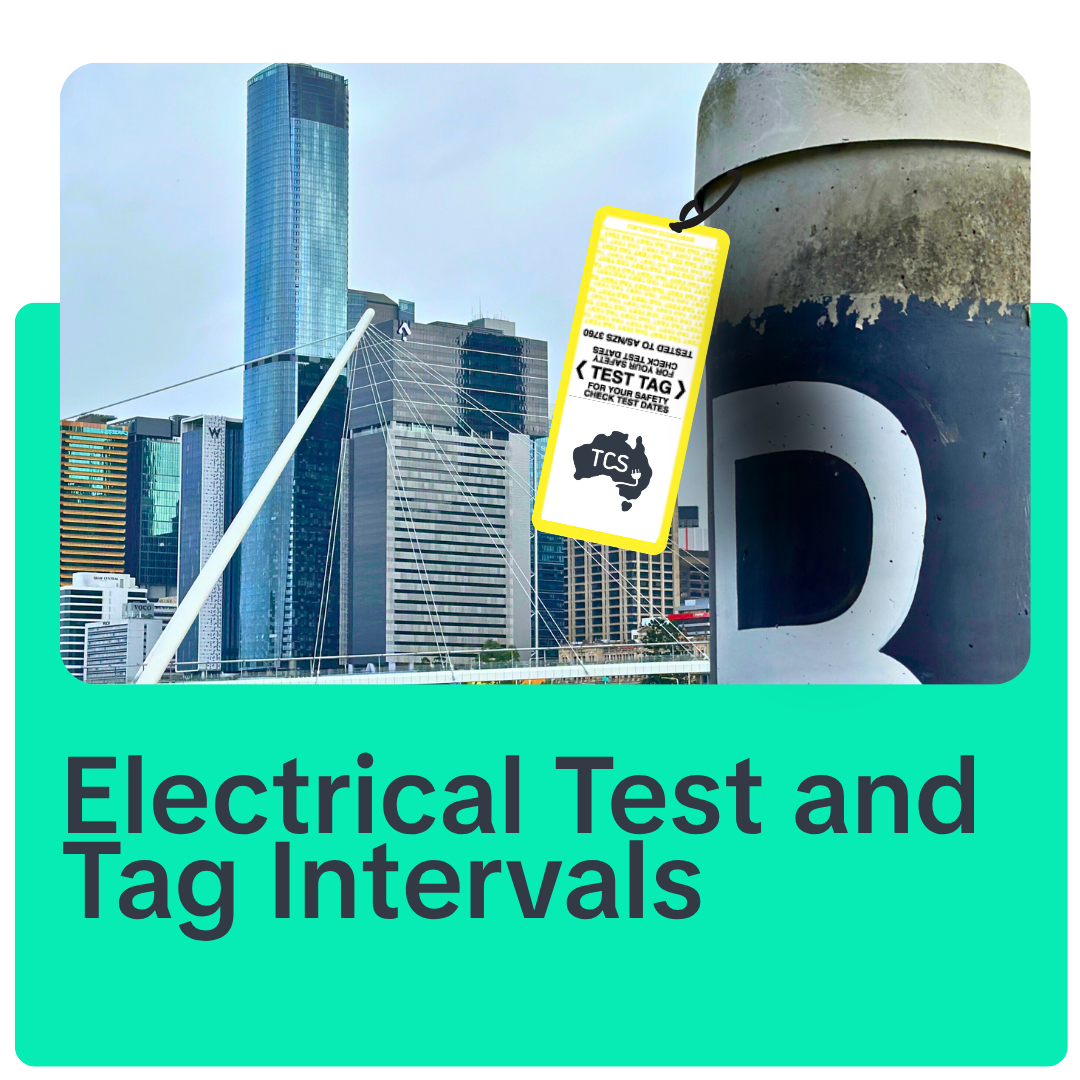

Electrical Test and Tag Intervals in Brisbane: A Guide to Compliance


By  • March 23, 2026

How long does a test and tag last? There is no single interval for every Brisbane workplace. Queensland requirements depend on the work, equipment category and applicable safety-switch provisions. The date on another business’s tag is not a reliable schedule for yours.

Understanding the testing intervals

The table below summarises selected maximum intervals in WorkSafe Queensland’s current guidance. It applies to the equipment covered by each category, rather than every electrical item on the premises.

Selected Queensland equipment inspection and test intervals

  • Work or equipment category: Construction — other equipment, including typical portable tools and leads

    Maximum interval: 3 months

  • Work or equipment category: Construction — transportable structures, fixed and transportable equipment, and construction wiring

    Maximum interval: 6 months

  • Work or equipment category: Manufacturing — double-insulated specified equipment

    Maximum interval: 12 months

  • Work or equipment category: Manufacturing — specified equipment that is not double insulated

    Maximum interval: 6 months

  • Work or equipment category: Office work — specified equipment, where there is no safety switch

    Maximum interval: 5 years

  • Work or equipment category: Service work — specified equipment, where there is no safety switch

    Maximum interval: 12 months

Source: WorkSafe Queensland’s equipment testing table. Construction requirements are addressed in AS/NZS 3012. Hire equipment, amusement work and rural work have additional or different provisions; use the full guidance for those categories.

What changes when there is a safety switch?

Section 138 of the Electrical Safety Regulation 2026 provides an inspection-and-testing pathway or a safety-switch pathway for specified office and service equipment. That is not a general exemption for every appliance or workplace. The relevant safety switch also has testing requirements.

Confirm the applicable pathway with a competent person. Distinguish a user push-button check from an operating-time/current test: they are different checks and can have different schedules. A safety switch does not make damaged equipment safe.

Why equipment scope matters

For office and service work, the definition of specified equipment includes extension leads and portable outlet devices, plus certain cord-and-plug equipment moved during its normal use. Equipment class alone does not justify applying “12 months for everything else” to an office.

Plan a usable retest schedule

Record the work category, item or location, relevant protection and the reason for each due date. Consider damage, changes in use, manufacturer instructions and site rules. Review the schedule when equipment moves from an office into a workshop or construction environment.

A scheduled due date never overrides an obvious defect. Report damaged plugs, crushed leads, overheating or exposed conductors immediately and keep unsafe equipment out of service.

Read which equipment needs assessment and how to interpret tag colours before using a colour or date as your only safety check.

Sources and further guidance

Need help arranging an assessment? Request a quote from The Compliance Standard or call 07 3668 0740.

Industry / Environment Testing Interval Examples of Equipment
Construction & Demolition 3 Months Power tools, extension leads, portable floodlights.
Manufacturing & Workshops 6 Months Bench grinders, welders, heavy machinery (non-double insulated).
Service Work 12 Months Commercial kitchens, hospitality, retail, and laboratories.
Office Environments 5 Years Computers, monitors, printers (if not protected by an RCD).

Test & Tag Services for Brisbane, QLD


SHARE THIS

Latest Posts

Warehouse staff walking between storage racks and stacked cartons
By Rob Thompson • November 23, 2026
Plan warehouse test and tag around shifts, dispatch windows and shared equipment. Practical preparation and handover tips from The Compliance Standard.

Point-of-sale screen and folded clothing on a retail shop counter
By Rob Thompson • November 19, 2026
Prepare shared retail equipment for a busy trading period. Organise storage, returned items, supervisor updates and access for a test and tag visit.

Coffee equipment and metal serving pots on a café counter
By Rob Thompson • October 28, 2026
Plan café and restaurant test and tag around preparation, service and closing. Organise equipment, access, staff contacts and a clear handover.

By The Compliance Standard • October 22, 2026
Plan an office move with practical steps for packing equipment, updating asset locations, arranging reconnection and handing over existing records.

By The Compliance Standard • October 11, 2026
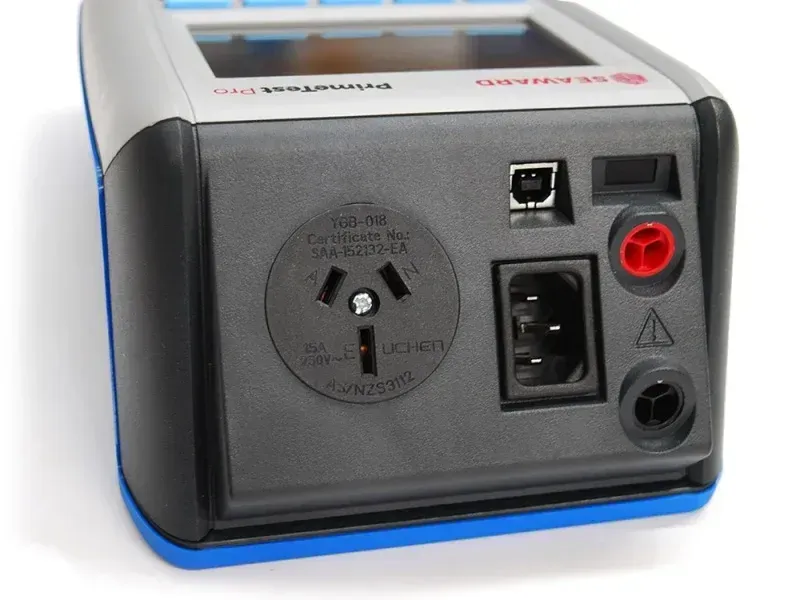
Prepare for workplace test and tag with an equipment estimate, access details, operating hours and previous records. Learn what to expect from the visit.
By The Compliance Standard • October 9, 2026
Learn how to remove failed equipment from use, record defects and arrange replacement or appropriately licensed repairs and retesting before reuse.
By The Compliance Standard • October 7, 2026
Explore a fictional test and tag report example, including asset identification, test outcomes, failed items, follow-up actions and relevant retest dates.

By The Compliance Standard • October 5, 2026
Understand small-business test and tag: equipment assessment, suitable schedules, access planning, failed-item handling and useful records after the visit.
By The Compliance Standard • October 3, 2026
Read how visual inspection and electrical testing assess workplace leads, what damage to look for and how to manage failed items and testing records.

By The Compliance Standard • October 2, 2026
Coordinate test and tag across multiple sites with equipment lists, local access contacts, suitable schedules, separate reports and clear defect follow-up.
Show More