


Are Test and Tag Records Required in Queensland?

The Compliance Standard • September 30, 2026

Share this article

A tagged power lead tells you it was checked on a particular day. It does not, on its own, give you a clear, workable record of your electrical safety process. So, are test and tag records required? For many Queensland businesses, maintaining records is the sensible and often necessary way to demonstrate that portable electrical equipment has been managed properly.

The exact legal requirement depends on your workplace, equipment and operating conditions. Not every office kettle or phone charger is subject to the same prescribed testing regime. However, employers and persons conducting a business or undertaking still have a duty to provide and maintain a safe workplace. When portable electrical equipment is inspected and tested, records provide the evidence behind that work.

For a busy site manager or office administrator, this is less about creating paperwork for its own sake. Good records make it easier to identify assets, plan retesting, respond to an incident and show that electrical safety has been taken seriously.

Are test and tag records required for every workplace?

There is no one-size-fits-all answer. Queensland electrical safety obligations are risk-based, and more specific rules apply in certain higher-risk environments. Construction and demolition work, for example, has particular requirements for inspecting, testing and tagging electrical equipment. Hostile operating environments can also require a more formal testing and record-keeping approach.

A typical low-risk office may not face the same mandatory test and tag intervals as a construction site. That does not mean records are irrelevant. If equipment is used by staff, visitors or contractors, the business still needs a reasonable system to keep it safe. Testing and tagging may form part of that system, particularly for portable appliances, extension leads, power boards and equipment that moves between locations.

The practical question is not simply, “Do we have tags?” It is, “Can we show what equipment we have, when it was checked, what happened during the check and what action was taken if a fault was found?” A clear report answers those questions far better than a faded tag on a cord.

Why records matter when tags go missing

Tags are useful visual controls. They can show a pass or fail result, the test date and the next due date. But tags can tear, fade, fall off or be replaced when a lead is repaired. They also do not provide a complete history of an item.

A test and tag record creates a separate source of truth. It should allow you to trace each item using an asset number or other identifier, even if the physical tag has been damaged. It also gives facilities teams and business owners a useful overview of their equipment rather than leaving them to walk the site and read individual labels.

This becomes particularly valuable when:

  • a regulator, client or insurer asks for evidence of maintenance;
  • an electrical incident needs to be investigated;
  • equipment is moved between sites or issued to staff;
  • a contractor brings appliances onto your premises; or
  • a new manager inherits responsibility for workplace safety.

Records also reduce the risk of testing the same equipment twice while overlooking another item. On a larger site, that simple visibility can save time at every future service visit.

What a useful test and tag report should include

A compliance report should be easy to read and practical to use. It does not need to bury your team in technical language, but it should capture enough detail to support your safety process.

At a minimum, a quality record generally identifies the business or site, the test date, the person who completed the work and each item tested. It should show the equipment description, location where relevant, a unique asset identification number and whether the item passed or failed. The report should also state the recommended or required next test date based on the equipment’s use and environment.

Where an item fails, the record should make the outcome clear. Was it removed from service? Was it repaired, replaced or sent for further assessment? A failed appliance should not quietly disappear from the report, because unresolved faults create both a safety risk and a gap in your process.

Electrical testing results can also be relevant, especially where the service is completed in line with the applicable Australian Standard. The level of detail needed will depend on the site and equipment, but the report should be more than a list of green tags.

Match the testing schedule to the risk

One of the most common mistakes is applying a single testing interval to every workplace. The right frequency depends on how and where equipment is used.

A power board under a receptionist’s desk has a different exposure to damage than an extension lead used daily in a warehouse. Equipment at a building site, workshop, commercial kitchen, school or outdoor event may be exposed to moisture, heat, dust, impact, frequent handling or rough treatment. Those conditions increase the likelihood of damage and may trigger more specific testing expectations.

Your records should reflect that context. They help show that your business has considered the risk rather than choosing an arbitrary annual date and hoping it covers everything. If your operations change - for example, you move premises, add a workshop or introduce more portable equipment - review the testing approach at the same time.

It is also worth separating portable electrical equipment from fixed electrical installations. Test and tag is not a substitute for proper electrical installation maintenance, repairs by a licensed electrician or routine checks of switchboards and fixed wiring. Each has a different role in workplace electrical safety.

Keep records accessible, not buried

A report has limited value if it sits in an inbox no one can find. Store test and tag records where the person responsible for workplace safety can access them quickly. For many businesses, a digital certificate or asset report is the simplest option, backed up in the company’s safety or maintenance records.

Keep related documents together where possible. This may include the current asset register, test and tag reports, repair invoices, records of failed items and any site-specific electrical safety procedures. If you manage multiple Brisbane or Queensland locations, clearly separate reports by site while retaining a central view of upcoming due dates.

The aim is not to over-administer a straightforward task. It is to make the next step obvious. When equipment is due for retesting, replaced or relocated, the record should help your team act without searching through old emails or guessing what happened last year.

A simple process works best

The most reliable approach is to treat testing, tagging and reporting as one service cycle. First, identify the equipment in scope and assess the workplace environment. Next, have the equipment inspected and tested by a competent person using an organised on-site process. Finally, receive and retain a clear report, then schedule the next review before the due date becomes a problem.

For businesses with limited time, the service should fit around operations. Testing can often be planned around quieter periods, shift changes or specific work areas so staff and customers are not unnecessarily interrupted. Clean execution matters as much as the paperwork: equipment should be returned to its place, faults should be explained plainly and the report should arrive promptly.

The Compliance Standard provides this kind of practical follow-up for Brisbane businesses, giving customers clear certification records after testing so the administrative side of compliance is easier to manage.

When records can protect your business

Records do not guarantee that an incident will never happen. Electrical equipment can be damaged after it has passed a test, which is why staff should still carry out basic visual checks and report damaged leads, plugs or casings immediately.

What records do provide is evidence of a considered maintenance system. If a question is raised after an incident, you can show what equipment was tested, when it was tested and how faults were handled. That is a far stronger position than relying on memory or a tag that may no longer be legible.

For contractors, records can also support site entry requirements. A principal contractor or client may ask for current test and tag evidence before allowing portable equipment onto site. Having accessible reports avoids last-minute delays and keeps the conversation straightforward.

Make documentation part of normal operations

Test and tag records are not just an audit file. Used properly, they are a working tool for safer equipment, clearer accountability and better planning. The right level of documentation will depend on your workplace, but keeping accurate, accessible reports is usually the simplest way to show that electrical safety has been actively managed.

If you are unsure whether your current process suits your site, start with the equipment your team uses every day and the conditions it works in. A clear record of what has been checked and what needs attention can turn a compliance question into a manageable routine.

Recent Posts

Warehouse staff walking between storage racks and stacked cartons
By Rob Thompson • November 23, 2026
Plan warehouse test and tag around shifts, dispatch windows and shared equipment. Practical preparation and handover tips from The Compliance Standard.

Point-of-sale screen and folded clothing on a retail shop counter
By Rob Thompson • November 19, 2026
Prepare shared retail equipment for a busy trading period. Organise storage, returned items, supervisor updates and access for a test and tag visit.

Coffee equipment and metal serving pots on a café counter
By Rob Thompson • October 28, 2026
Plan café and restaurant test and tag around preparation, service and closing. Organise equipment, access, staff contacts and a clear handover.

By The Compliance Standard • October 22, 2026
Plan an office move with practical steps for packing equipment, updating asset locations, arranging reconnection and handing over existing records.

By The Compliance Standard • October 11, 2026
Prepare for workplace test and tag with an equipment estimate, access details, operating hours and previous records. Learn what to expect from the visit.
By The Compliance Standard • October 9, 2026
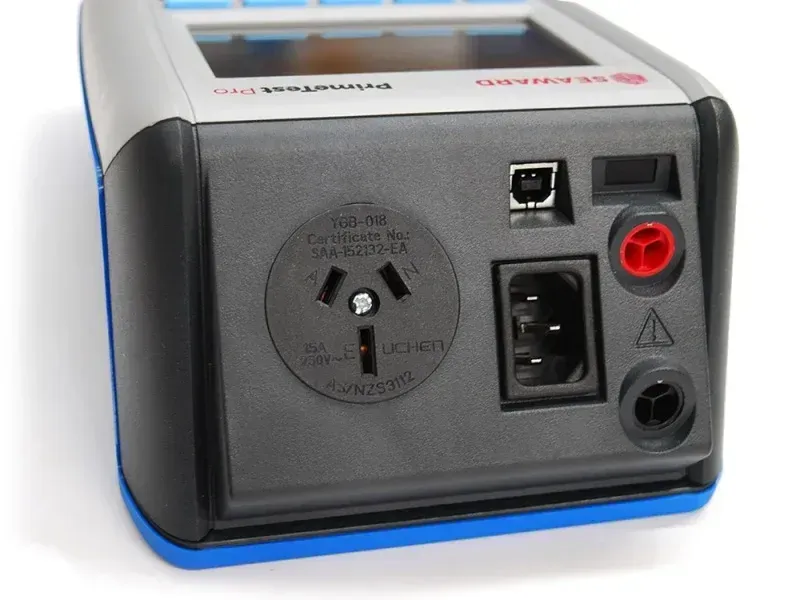
Learn how to remove failed equipment from use, record defects and arrange replacement or appropriately licensed repairs and retesting before reuse.
By The Compliance Standard • October 7, 2026
Explore a fictional test and tag report example, including asset identification, test outcomes, failed items, follow-up actions and relevant retest dates.

By The Compliance Standard • October 5, 2026
Understand small-business test and tag: equipment assessment, suitable schedules, access planning, failed-item handling and useful records after the visit.

By The Compliance Standard • October 3, 2026
Read how visual inspection and electrical testing assess workplace leads, what damage to look for and how to manage failed items and testing records.

By The Compliance Standard • October 2, 2026
Coordinate test and tag across multiple sites with equipment lists, local access contacts, suitable schedules, separate reports and clear defect follow-up.
Show More